Lianhuashan Park in Shenzhen: the Lotus Hill where China bet on reform
A low green hill in the heart of Futian, a bronze Deng Xiaoping striding forward, and a panorama of a city that grew from a fishing outpost into a megacity in four decades. Here is what to see on Lotus Hill, what it really means and how to get there.
 Mikhail Ansimov5 min read
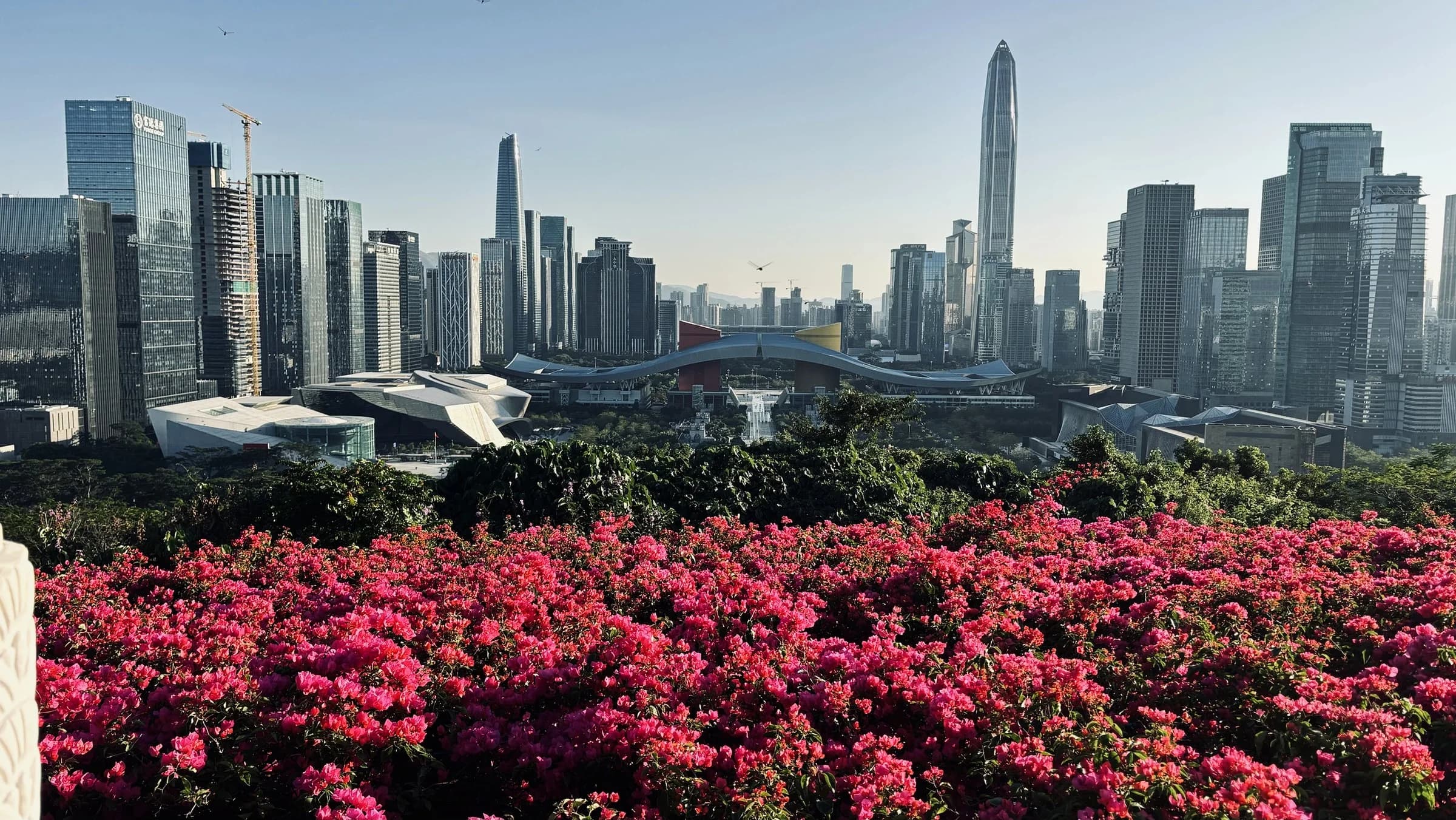
Вид с вершины Ляньхуашань на центральную ось Футяня: в центре — Гражданский центр, справа — Ping An Finance Center (599 м)
Shenzhen has plenty of places with a beautiful view of the city. But there is one place from which you can actually understand it: Lotus Hill, Lianhuashan (莲花山). A low green hill in the very centre of Futian, a bronze Deng Xiaoping striding forward on the summit, and at his feet the entire business district of a megacity that was a fishing outpost a little over forty years ago. Here is why it is worth the climb, what exactly you will see and how to plan your visit.
Why “Lotus Hill”
The name is literal. The park is formed by seven neighbouring peaks that together resemble an open lotus flower. The main peak is only 106 metres above sea level: the gentle main path gets you to the top in 10–15 minutes, while the forest trails take longer and give your legs a proper workout.
Construction began in October 1992, and the park opened on 23 June 1997. It covers 181 hectares and is one of Shenzhen's largest city parks. Around 10 million people visit every year.
Deng Xiaoping, mid-stride
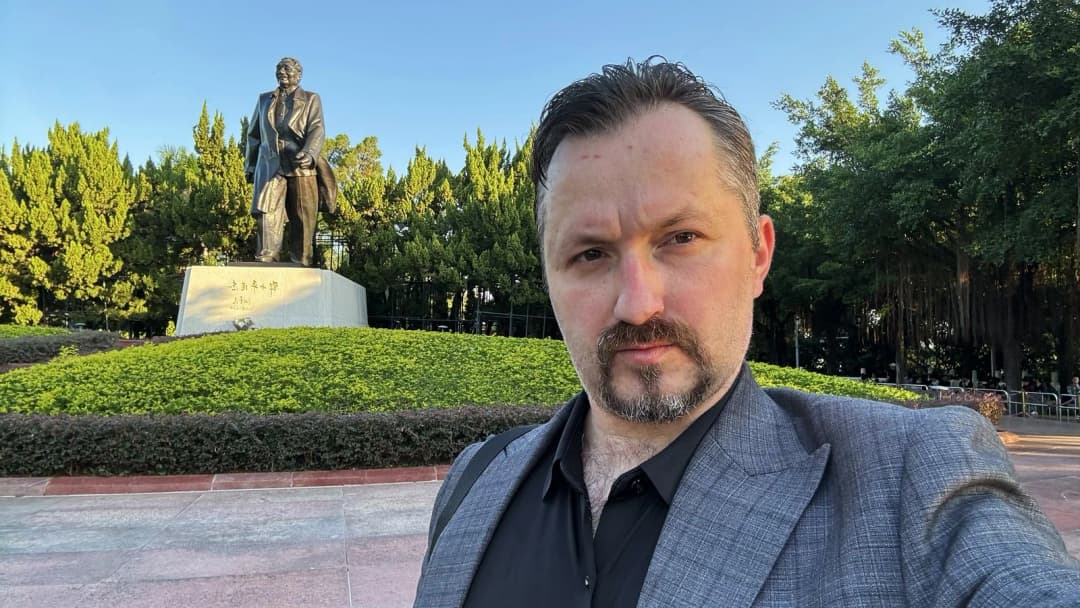
The summit is a plaza of about 4,000 m², the highest open-air square within the city. In its centre stands a 6-metre bronze statue of Deng Xiaoping on a 3.68-metre pedestal. It was unveiled on 14 November 2000, with the inscription on the pedestal written by Jiang Zemin.
Look at the pose. This is not a classic monument with a raised hand: Deng is walking with a long stride, his coat flapping. The sculptors built a clear message into that step — the steps of reform should be bigger and bolder. For Chinese visitors this is more than a monument. People bring flowers, and on the first day of the Lunar New Year they come to “wish Grandpa Deng a happy new year”: in 2001, just a couple of months after the unveiling, more than 200,000 people came on that single day.
Why here? Shenzhen was China's first special economic zone, an experiment launched under Deng Xiaoping in 1980. The city itself is his strongest argument in the debate over whether China needed markets and opening up.
The 1984 inscription wall
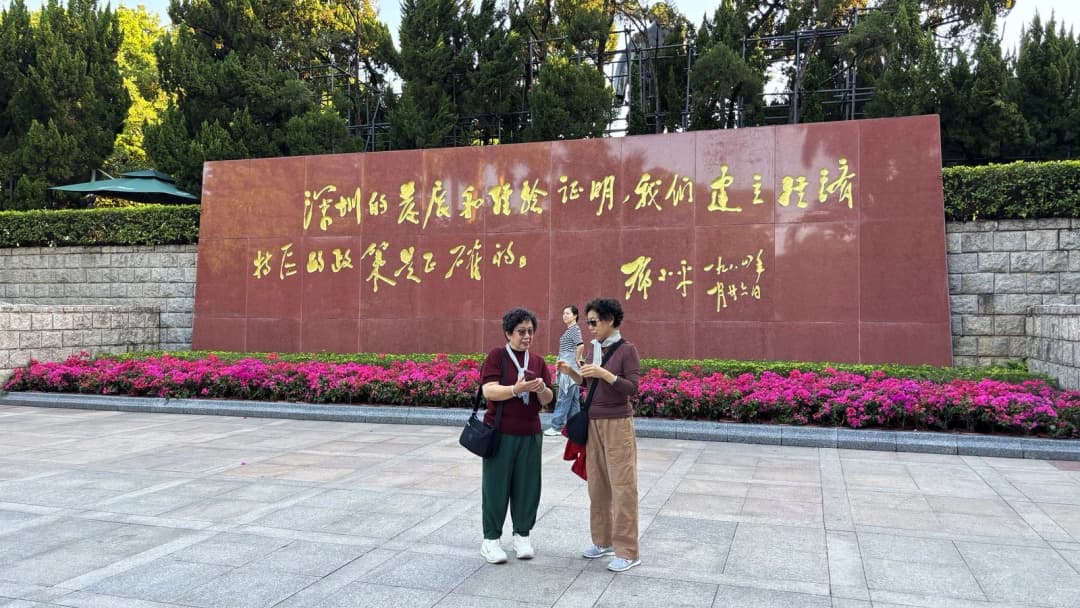
On your way to the summit you will pass a red granite wall with golden characters. It reproduces Deng Xiaoping's own calligraphy:
深圳的发展和经验证明,我们建立经济特区的政策是正确的。
邓小平 一九八四年一月二十六日
Translation: “Shenzhen's development and experience prove that our policy of establishing special economic zones is correct.” Dated 26 January 1984.
As a sinologist, I suggest pausing here for a minute. In the early 1980s the special zones faced fierce criticism inside China, and these few lines were a political verdict: the experiment worked and should be expanded. That same year, 14 more coastal cities were opened up. Without context it is just beautiful calligraphy; with context it marks the starting point of the China the whole world trades with today.
The view that makes the climb worth it
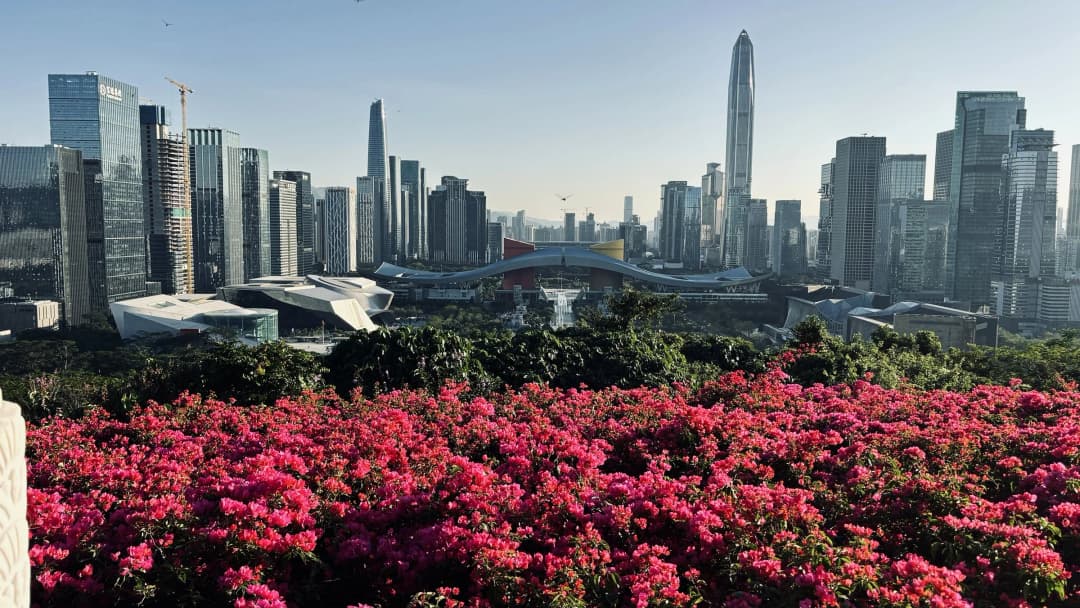
The summit offers Shenzhen's signature panorama. Lianhuashan sits at the northern end of Futian's central axis, so the city unfolds before you almost symmetrically:
- Civic Center (市民中心) — the building with a huge wavy roof often compared to a bird's outspread wings. It houses the city government.
- Ping An Finance Center (平安金融中心) — 599.1 metres, Shenzhen's tallest building and one of the tallest in the world. Its observation deck on the 116th floor lets you look back down at the park.
- Futian CBD — a wall of skyscrapers housing banks, insurers, tech companies and the Shenzhen Stock Exchange.
In the foreground is a pink sea of bougainvillea. In Chinese it is called 簕杜鹃, and it is Shenzhen's official city flower. Since 2003 Lianhuashan has hosted the city's annual bougainvillea show every November — if you are in town in late autumn, you are in luck.
What else happens in the park
- Kites. At the foot of the hill is Kite Square, a vast lawn where the sky gets crowded on windy weekends. Locals even joke that flying a kite on Lianhuashan is a mandatory Shenzhen ritual.
- Night climbs. Another local tradition is walking up in the evening to see the illuminated city centre.
- Lakes and gardens. Down below are lotus ponds and lakes; two of the park's scenes are on the official list of the “Eight Views of Shenzhen”.
- Unexpected antiquity. The park contains the tomb of Huang Motang from the Southern Song dynasty, more than 700 years old — almost an artefact from another civilisation in a city just over forty years old.
Practical information
- Entry: free, no booking needed (booking is only required for parking).
- Opening hours: 6:00–23:00, last entry 22:30.
- Address: 深圳市福田区红荔路6030号 (6030 Hongli Road, Futian District).
- Metro: the most convenient station is Children's Palace (Shaoniangong, 少年宫, lines 3 and 4). From exits C/D/E a footbridge over Hongli Road takes you straight to Kite Square; exit F1 leads to the main south gate. Alternatives: Lianhuabei (莲花北, line 4) and Lianhuacun (莲花村, lines 3 and 10).
- When to go: early morning or a couple of hours before sunset — soft light, fewer people and less heat. Bougainvillea blooms in March–April and November–December.
- How long: 1.5–2 hours for the climb, the summit and the walk down, without rushing.
Why business visitors should come here
Lianhuashan is the best place to grasp the logic of Shenzhen in an hour: where the city came from, why things are built so fast here and why Chinese partners speak about “reform” with such pride. I recommend starting your acquaintance with the city right here — before trade shows, factories and negotiations. With this context, a lot of what your Chinese partners say becomes much clearer.
If you would like to see Shenzhen with someone who lives here and speaks Chinese, take a look at my private tours in China. We will build a route around your goals — from Lotus Hill to the factory floor.
FAQ
Is there an entrance fee for Lianhuashan Park?
No. Entry is free and no booking is required; advance booking is only needed for the car park.
What are Lianhuashan Park's opening hours?
The park is open from 6:00 to 23:00, with last entry at 22:30.
Which metro station is closest to Lianhuashan Park?
Children's Palace (Shaoniangong, 少年宫) on lines 3 and 4: from exits C/D/E a footbridge leads to Kite Square, and exit F1 leads to the main south gate. Lianhuabei (line 4) and Lianhuacun (lines 3 and 10) also work.
Is the climb to the summit difficult?
No. The main peak is 106 metres above sea level, and the main path takes 10–15 minutes.
When is the best time to visit?
Early morning or a couple of hours before sunset. Bougainvillea blooms in March–April and November–December, and the city's bougainvillea show is held in the park in November.
- #Shenzhen
- #Lianhuashan
- #China travel guide
- #Deng Xiaoping
- #Futian
- #Things to do in Shenzhen