Collectivism in China is often described as an enduring trait of the national character: "there, people always think of the group rather than themselves." The formula is convenient, but it explains little. It mixes Confucian tradition, socialist organization, market competition, and everyday compromises between the personal and the common. It is more accurate to view collectivism not as a property but as a system of coordinates: it sets the framework for decisions but does not predetermine them. In the family, at work, and in the urban community this framework works differently, and within China itself there are noticeable regional and generational differences.
The Family: "Jia" as a Decision-Making Unit
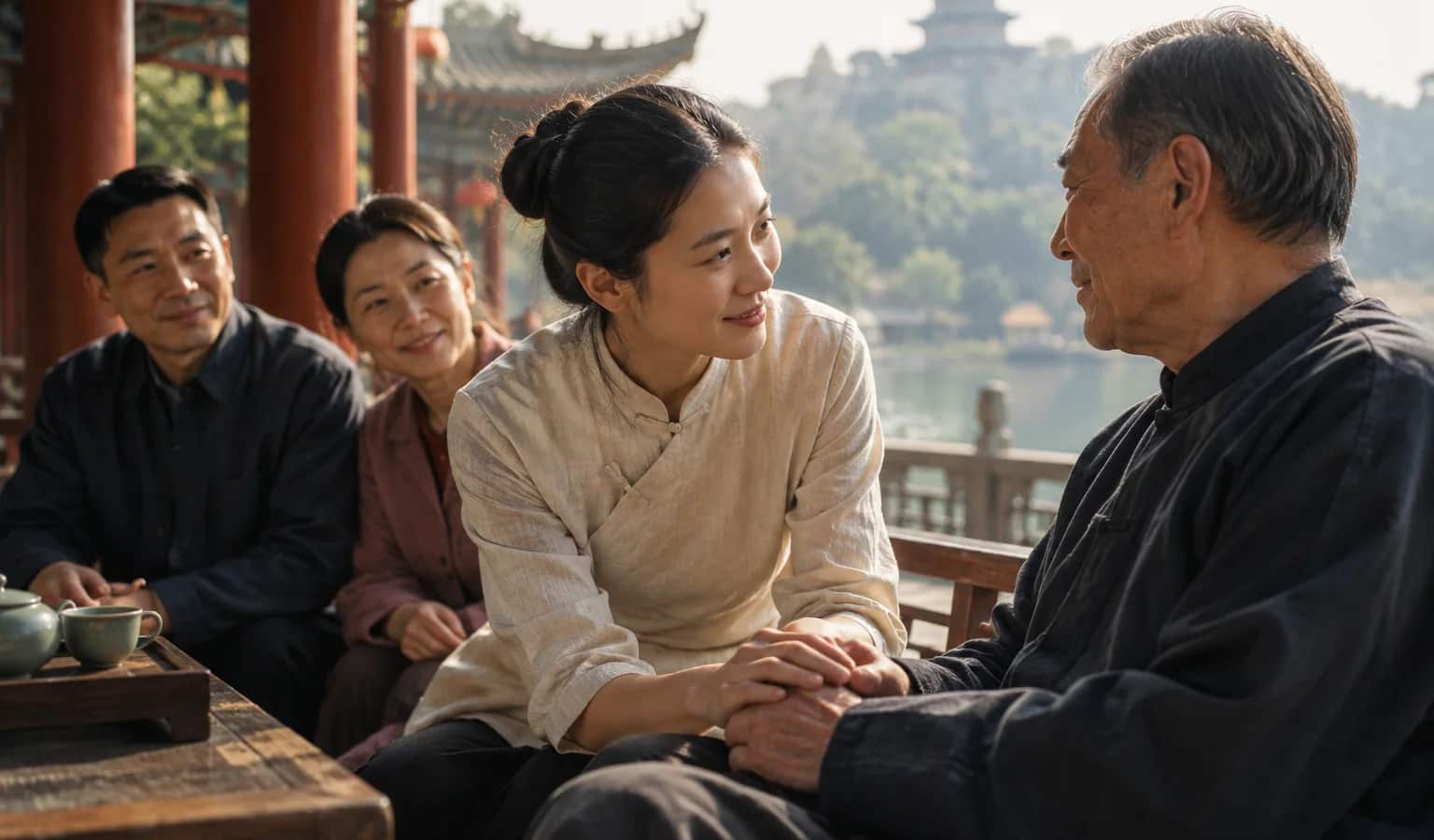
In Chinese cultural tradition, the family (jia) is viewed not simply as a circle of loved ones but as the basic unit of social life. Confucian ethics emphasizes filial piety (xiao) — respect for and care of elders — as well as the mutual obligations of generations. In practice, major decisions are rarely made by a person alone: moving, choosing a profession, buying a home, and getting married are discussed with parents and often with a wider circle of relatives.
Hence the concrete practices. Grandparents often take part in raising grandchildren, helping working parents. Financial support flows in both directions: parents help children with a down payment on an apartment, and adult children take on the care of the elderly. The desire "not to air dirty laundry in public" is also tied to the family framework: conflicts are resolved within the family, kept out of public view.
At the same time, the family is changing. In cities, the nuclear model is spreading — a married couple living separately. Parenthood is more often postponed, and women's career trajectories in megacities are becoming more independent. This does not cancel obligations to elders but redistributes them: help is increasingly provided through money and organization rather than shared daily life. In the same country, extended families in which three generations live together coexist with urban couples who see relatives only on holidays.
Work: Team, Hierarchy, and "Face"
Chinese enterprises show collectivist practices in form: team discussions, group responsibility for results, an emphasis on harmony within the team. Decisions are often prepared in advance, and public discussion tends to confirm an agreement already reached. The concept of "face" (mianzi) plays a major role: openly disagreeing with a manager or colleague may be perceived as a blow to reputation, so criticism is often delivered privately.
However, reducing the Chinese office to silent submission to the collective would be an oversimplification. The labor market in large cities is highly competitive, turnover in the tech and service industries is significant, and employees actively negotiate terms. Collectivist expectations — "don't let the team down," "work overtime during peak periods" — coexist with individual career strategies. A person can be loyal to their team and at the same time be looking for a new job.
Hierarchy here does not contradict collectivism but complements it: the group unites around the person senior in position or age. That is why attempts to transfer the Western model of "flat" discussions without taking this framework into account often stall. Team rituals and competition are not mutually exclusive things but two layers of a single corporate culture.
Society: Neighborhood Committees, Volunteering, and Digital Solidarity
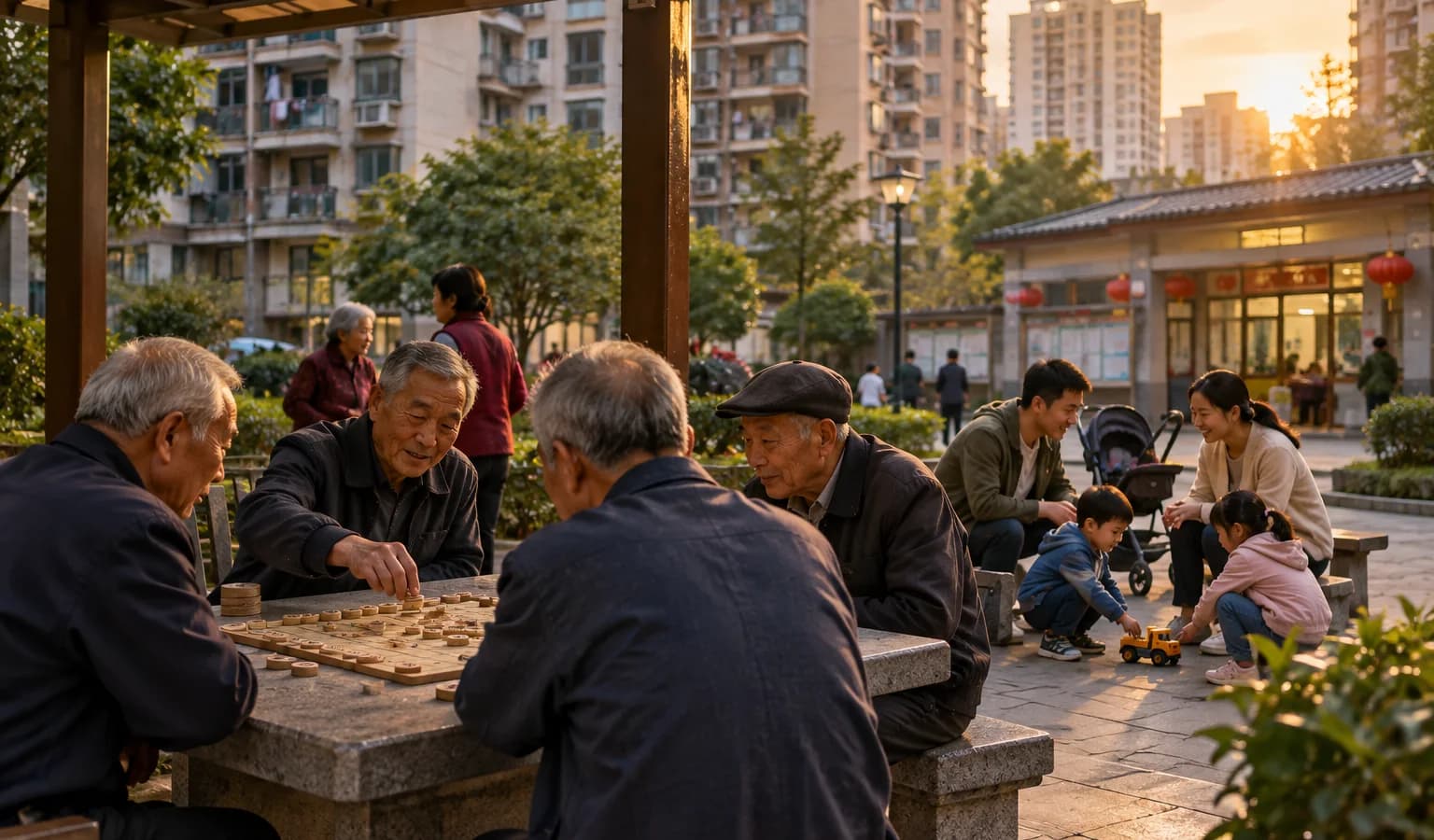
At the level of urban governance, collectivism has institutional forms. In residential neighborhoods, neighborhood committees operate, organizing area cleanups, holidays, and assistance to the elderly, and taking part in disseminating information. During mass campaigns — from epidemic control to environmental actions — it is these structures that become the conduits of mobilization.
Volunteering in China is often organized from above but is not reducible to a formality: students, retirees, and company employees take part in environmental, educational, and social projects. In recent years, digital forms of solidarity have been added: messenger groups, crowdfunding for medical treatment, mutual aid within residential complexes. The state encourages collective values through education, media, and public awards, but the concrete content of these values depends on the local context.
Generations and Regions: Where Collectivism Is Weakening
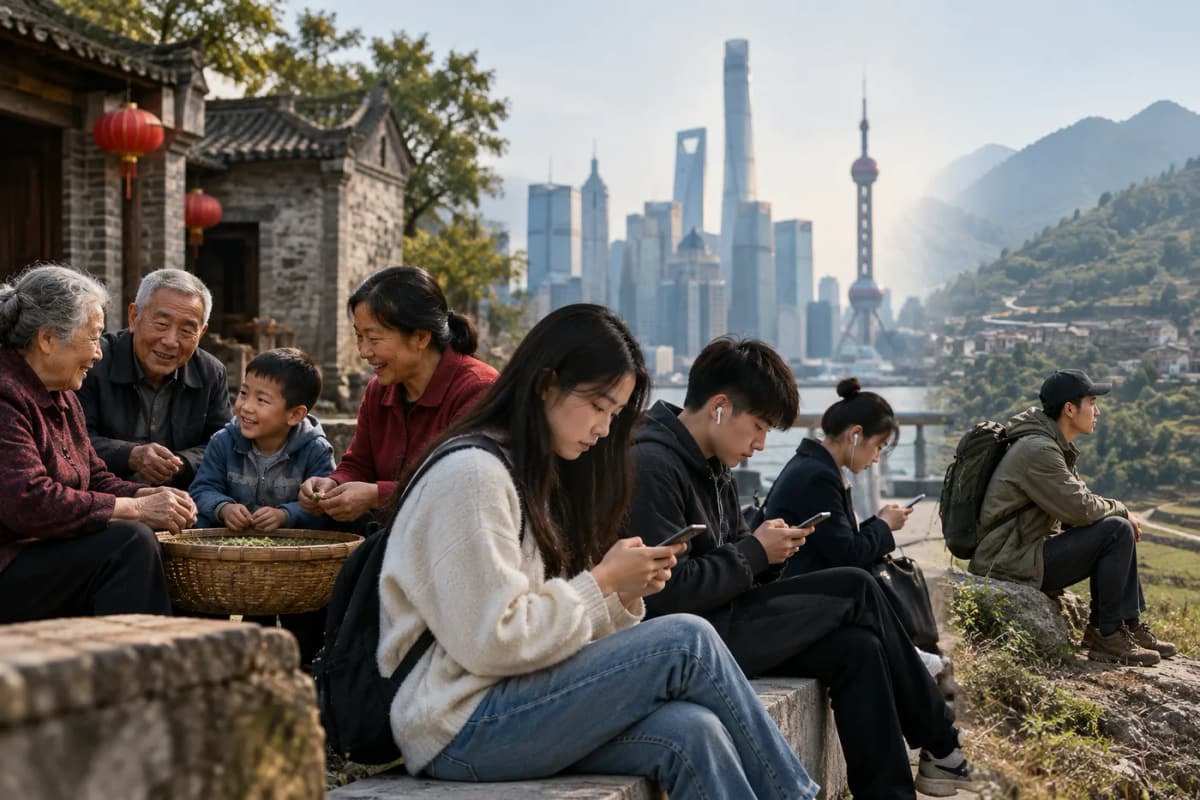
One of the main oversimplifications is to speak of "the Chinese" as a single group. Urban youth in Beijing, Shanghai, or Shenzhen increasingly assert personal boundaries, choose individual career trajectories, and postpone starting a family. This is not a rejection of collectivism but its reassembly: obligations to parents remain, but the circle of "one's own" narrows.
Migrants from rural areas working in cities often maintain denser mutual-aid networks — native-place associations, shared housing, remittances home. In rural communities, kinship and neighborly ties still play a key role in daily life. There are also differences between regions: the south and east of the country with their clan traditions and the north with a different settlement history produce different models. Therefore, any generalization about "Chinese collectivism" should be tested with the question: who exactly is meant, and in what context.
Contested Questions: Resource or Constraint?
Criticism of collectivism as a suppression of individuality has grounds. Group expectations can limit personal choice and create pressure on those who do not fit the norm — for example, people who forgo marriage or children. On the other hand, the same mechanisms provide tangible support: help with caring for the elderly, access to a network of contacts when job hunting, and psychological support in a crisis.
It is more accurate to speak not of "good" or "bad" collectivism but of its costs and benefits in a specific situation. Urbanization, market reforms, and digitalization are changing the balance but do not abolish the framework itself. Caution is also needed with conclusions about trends: data on generational shifts are often fragmentary, and regional differences do not lend themselves well to a single statistic.
FAQ
Is collectivism in China the same in the family and at work?
No. In the family it is built on kinship obligations and care for elders; at work, on team responsibility, hierarchy, and preserving "face." The mechanisms overlap but do not coincide.
Can one say that all Chinese people are collectivists?
No. Within the country there are noticeable differences by age, region, and type of employment. Urban youth and rural residents may display different patterns of behavior.
Does collectivism hinder individual careers?
Not necessarily. Group ties often help with employment and advancement. Constraints arise where personal choice conflicts with the expectations of the family or the collective.
How does collectivism manifest in everyday city life?
Through neighborhood committees, volunteer actions, joint events in courtyards, and digital mutual-aid groups within residential complexes.