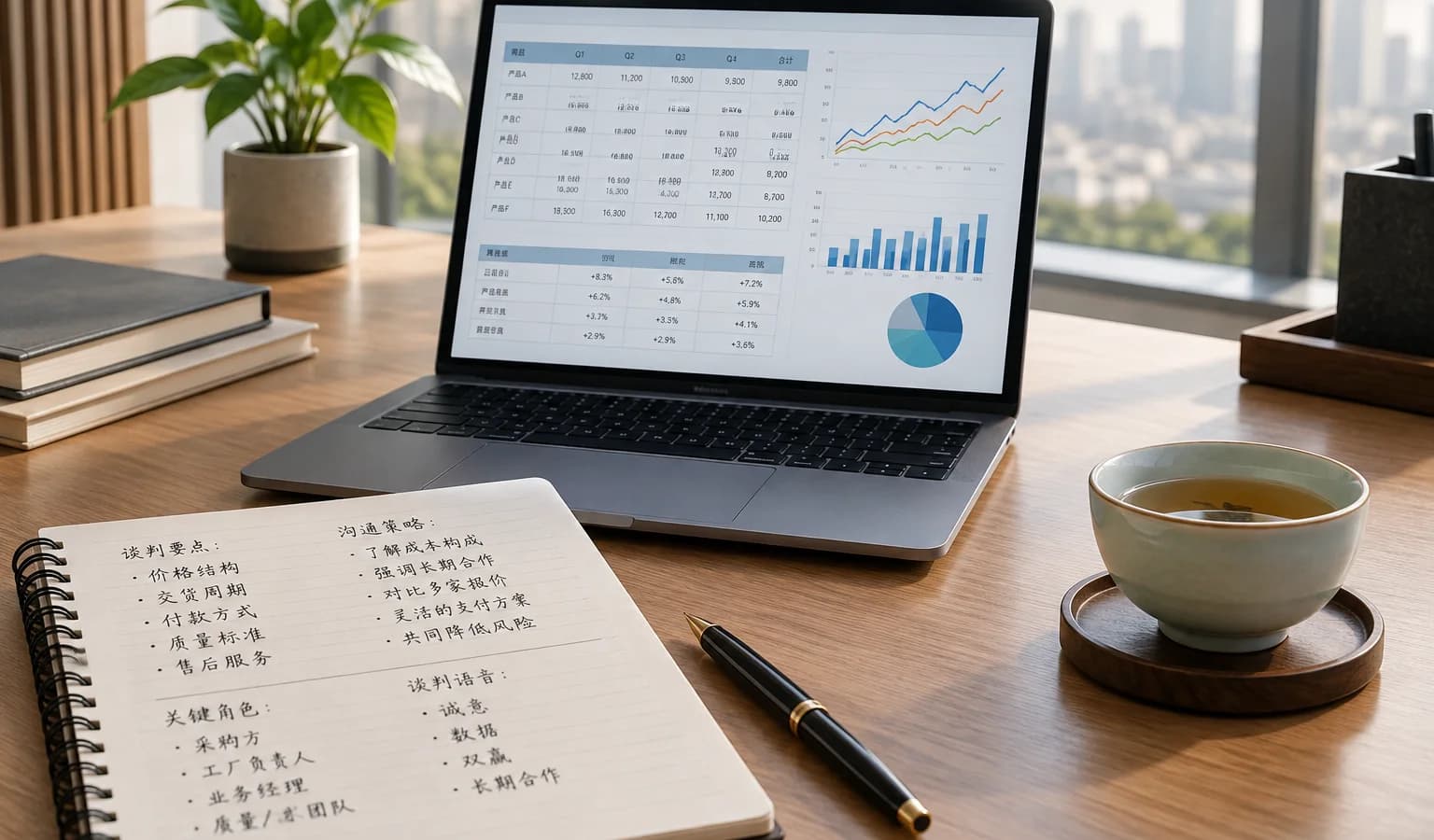
How to Discuss Price with a Chinese Factory: Structure, Roles, and the Language of Negotiation
A conversation about price with a Chinese factory is not a haggle, but a sequence of different conversations: about the structure of the quotation, about who makes the decision, about what a concession looks like and how it is recorded. The article examines the logic from which negotiation techniques grow, and shows which formulations change the conversation and which close it.
 Mikhail Ansimov14 min read
A conversation about price with a Chinese factory is rarely a single conversation. Usually it is a sequence of several: first you find out what the figure consists of, then who has the right to change it, then what you are willing to offer in return, and only at the end how to lock in the result. An attempt to skip the first stages and go straight to haggling usually ends either in a polite refusal or in a discount that turns into a change in other terms. Below is the logic from which negotiation techniques grow, and how this logic looks in practice.
Why a conversation about price with a Chinese factory is structured differently than with a European supplier
Price at a Chinese factory is not a fixed value but a variable depending on volume, material, packaging, payment terms, season, and production load. The first quotation is usually neither final nor arbitrary: it reflects the specific configuration of the order that you described in your inquiry. If you requested a price for 500 units in standard packaging with payment after shipment, you received the price for exactly that configuration. If you request 5000 units with prepayment, you will get a different one.
This does not mean that the first figure is always fair. It means that arguing with it is pointless until it is clear what it is made of. A European supplier often sends a price with the caveat "subject to" and breaks it down into components themselves. A Chinese factory more often sends a final figure and expects you either to agree or to ask questions. If there are no questions, the price is considered accepted.
The second difference is in who conducts the conversation. In a European company, the commercial proposal is often prepared by the same person who later approves the discount. At a Chinese factory, the export manager is a communicator, not a decision-maker. He can pass your request to the owner or the production manager, but he himself rarely has the authority to lower the price. Understanding this changes tactics: putting pressure on the manager is pointless, and sometimes harmful—he may simply stop passing on your requests.
What the price is made of: a conversation about structure, not about the figure
A productive move is not to argue with the final figure but to break it down. A typical FOB quotation includes several components: material cost, processing, packaging, rejection rate, logistics to the port, possible intermediary commission. In some industries certification, testing, and branding are added. If you only see the total, you do not know where there is room for discussion and where there is not.
Questions that move the conversation from the plane of "expensive/cheap" to the plane of "what exactly are we buying":
- Can we see a breakdown of the price by components: material, processing, packaging, shipment?
- What share of the price is the material cost, and how does it change when the specification changes?
- Is packaging included in the quotation, and if so, which exactly?
- What percentage of rejection is built into the price?
- Is delivery to the port included, and if so, to which one exactly?
- Is there an intermediary commission, and can we work directly?
These questions are not haggling. They show that you understand the structure of the price and create a basis for a substantive conversation. Often already at this stage it turns out that some components can be changed: replace the material with a cheaper analogue, simplify the packaging, move the production schedule to a less busy period. This is not a discount in the pure sense, but it is a reduction in price without loss of quality.
Important: not all factories are ready to disclose the structure of the price. Some perceive such a request as distrust or as an attempt to pry out commercial information. In this case, it is worth explaining that you want to understand what you are paying for, not to find where to save. The formulation "I want to understand what the price is made of so that we can discuss it substantively" works better than "why is it so expensive."
Who at the factory makes the decision about price
At a Chinese factory, roles are distributed quite clearly. The export manager (外贸业务员, wàimào yèwùyuán) handles correspondence, prepares quotations, and coordinates details. A sales representative may be present at an exhibition and in negotiations, but his role is communication. The factory owner or production manager (厂长, chǎngzhǎng) makes the decision about price, especially when it concerns a substantial discount or non-standard terms.
This means that your request for a discount passes through several hands. The manager receives it, evaluates it, passes it higher, receives an answer, and returns it to you. If you put pressure on the manager, demanding an immediate answer, you put him in an awkward position: he cannot resolve the issue himself, but he often does not want to admit this directly. The result is either silence or an evasive answer.
Practical conclusion: if you want to discuss price substantively, it is worth understanding as early as possible who exactly you are talking to. Sometimes it makes sense to ask for a meeting with the owner or production manager—especially if the order is large. But here too caution is needed: a demand for a meeting with the bosses may be perceived as a signal that you are dissatisfied with the manager, and this will affect his attitude toward you.
The first price, the target price, and the "price for show"
The first quotation often includes a margin. This is not necessarily an attempt to deceive—it is standard practice: the factory builds in room for a possible discount, because the buyer almost always asks for one. If you name your target price in the first message, you deprive yourself of the opportunity to learn where the real boundary is.
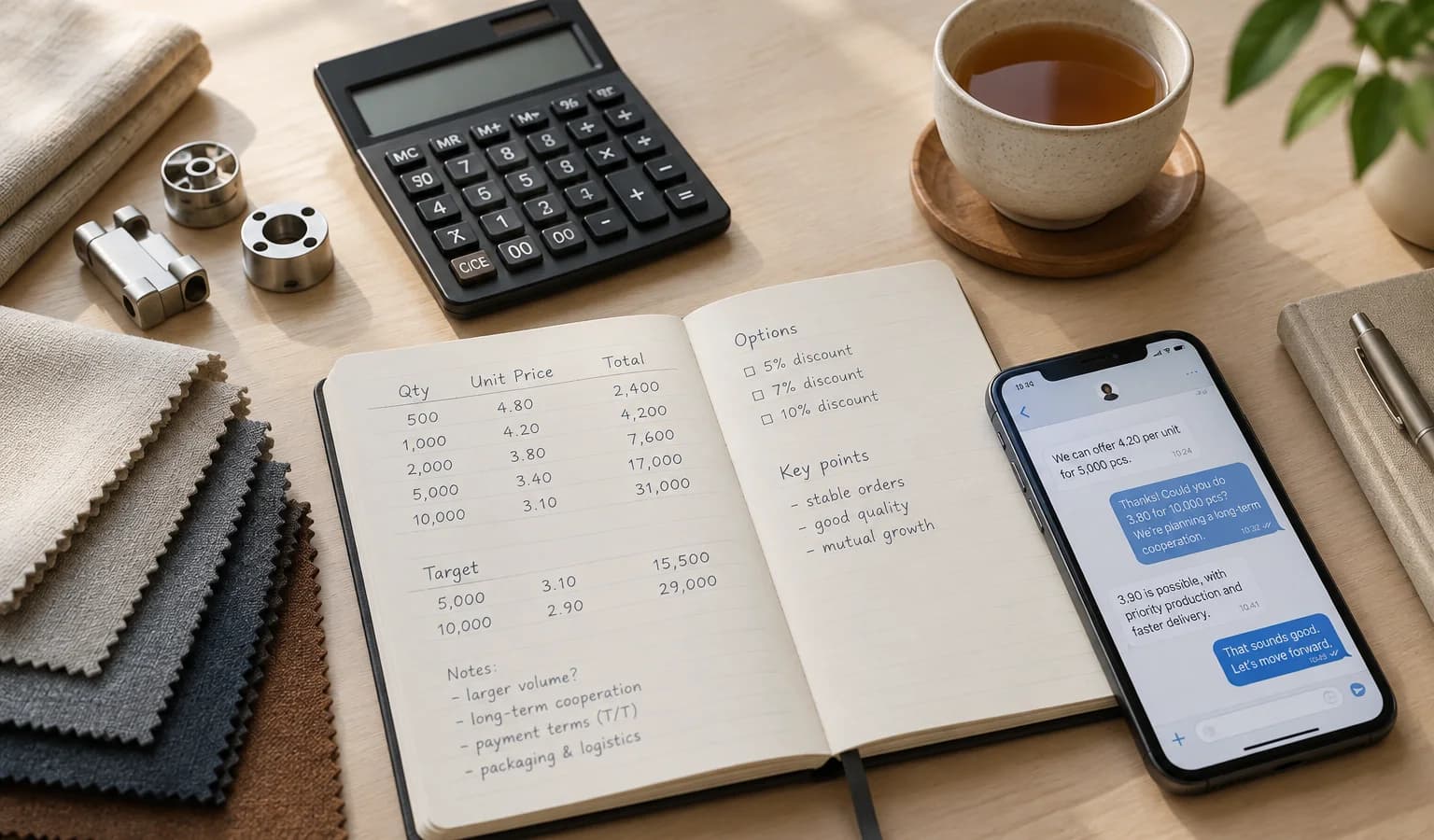
A more productive approach is to indicate a range, not a specific figure. For example: "We are considering an order in the volume of X, and our budget is in the range Y–Z. Can you offer terms within this range?" This does not obligate you to buy at the named price, but it lets the factory understand that you are serious and that you have constraints.
The answer "this is too low" can mean two different things. First: the price is indeed below cost, and the factory cannot accept it. Second: the price is acceptable, but the factory wants to get more. You can distinguish one from the other by what happens next. If the factory offers an alternative—a different material, a different volume, a different schedule—then the conversation continues. If the answer is dry and final, most likely you have gone beyond the boundary of what is possible.
Sometimes a factory names a "price for show"—deliberately inflated in order to check how well informed you are. If you show that you know the market, the price may come down without additional requests. If not, you risk overpaying.
Concession as exchange, not as victory
A price reduction at a Chinese factory is almost always accompanied by a change in another parameter of the order: volume, payment term, packaging, or production schedule. This is not a hard rule, but a common logic: the factory does not lower the price just because; it looks for a way to compensate for the loss.
If you ask for a discount, it is worth immediately offering what you are ready to give in return. For example:
- Increasing volume: "If we increase the order to X units, what will the price be?"
- Changing payment terms: "We are ready to make a prepayment of 50% instead of 30% if the price is lower."
- Simplifying packaging: "We can use standard packaging without branding if this lowers the price."
- Flexible schedule: "We can wait until a less busy period if this allows the price to be lowered."
Such an approach moves the conversation from the plane of "you owe us a discount" to the plane of "we are looking for a solution together." This corresponds to the logic of exchange, which in Chinese business communication is often perceived better than a one-sided demand.
Pause, indirect refusal, and why a direct "no" rarely helps
In Chinese business communication, a direct "no" is often replaced by indirect formulas: a pause, a delay in answering, an evasive formulation. This does not necessarily mean that you are being refused. It may mean that the interlocutor does not want to say "no" directly in order not to create conflict.
If you asked a question about price and did not receive an answer within a few days, this may be a signal. It is not worth immediately writing a follow-up email demanding an answer. It is better to wait and then ask the question in a different form: "We are still considering your option. Do you have the opportunity to offer an alternative?" This gives the interlocutor room to maneuver.
Phrases like "we will think about it," "the price is already minimal," "it depends on the volume" are not always a final answer. Often this is an invitation to further conversation, but in an indirect form. If you respond with direct pressure, you may close the conversation. If you respond with a question or a proposal, you continue it.
Face, publicity, and price: why you cannot put pressure in front of witnesses
Discussing price in the presence of third parties—colleagues, other buyers, an interpreter—changes the dynamics. In Chinese business culture, public disagreement or pressure may be perceived as a threat to the interlocutor's face (面子, miànzi). This does not mean that public negotiations should be avoided, but it does mean that it is worth choosing formulations that do not put the interlocutor in an awkward position.
The distinction between 面子 (miànzi) and 脸 (liǎn) is useful here. 面子 is public standing, reputation in the eyes of others. 脸 is a person's moral evaluation, their inner dignity. If you publicly point out that the price is inflated, you may hurt the interlocutor's 面子. If you do this in a private conversation, you touch only 脸, which is less painful.
Practical conclusion: if you feel that the conversation about price is becoming tense, try to move it into a private format. For example, suggest discussing the details one-on-one, without an interpreter or other participants. This is not a guarantee of success, but it reduces the risk that the interlocutor will go on the defensive in order to save face.
The language of price: which formulations work and which close the conversation
The word 贵 (guì, expensive) in a direct reproach is rarely a strong negotiation move. It is perceived as an assessment, not as a request. If you say "this is expensive," the interlocutor hears "you are inflating the price," not "let's discuss how to make it acceptable." It is more productive to talk about structure or about your budget.
| Situation | Formulation | Translation |
|---|---|---|
| Request for price structure | 请问这个价格包括哪些部分? (Qǐngwèn zhège jiàgé bāokuò nǎxiē bùfèn?) | Could you tell me what parts this price consists of? |
| Offer of exchange | 如果我们增加数量,价格可以调整吗? (Rúguǒ wǒmen zēngjiā shùliàng, jiàgé kěyǐ tiáozhěng ma?) | If we increase the volume, can the price be adjusted? |
| Polite refusal | 这个价格超出了我们的预算,能否考虑其他方案? (Zhège jiàgé chāochūle wǒmen de yùsuàn, néngfǒu kǎolǜ qítā fāng'àn?) | This price exceeds our budget; could other options be considered? |
| Request for a final offer | 能否给我们一个最终报价? (Néngfǒu gěi wǒmen yīgè zuìzhōng bàojIà?) | Could you give us a final offer? |
These formulations do not guarantee a discount, but they keep the conversation on a working plane. They do not put the interlocutor in a position where he must defend himself.
Mistakes that cost more than a discount
Some mistakes in a conversation about price can cost more than the discount itself. Here are the most common:
- Naming a target price before clarifying the structure. You may name a figure that turns out to be below cost, and the conversation will end.
- Haggling over each point separately. If you ask for a discount on the material, then on the packaging, then on delivery, this is perceived as pettiness and can spoil the relationship.
- Changing terms after agreement. If you agreed on a price and then ask to change the volume or deadlines, this undermines trust.
- Negotiating with a manager who does not have the authority. You waste time and create tension.
- Publicly putting the interlocutor in an awkward position. This can close the conversation for a long time.
What to do after agreeing on the price
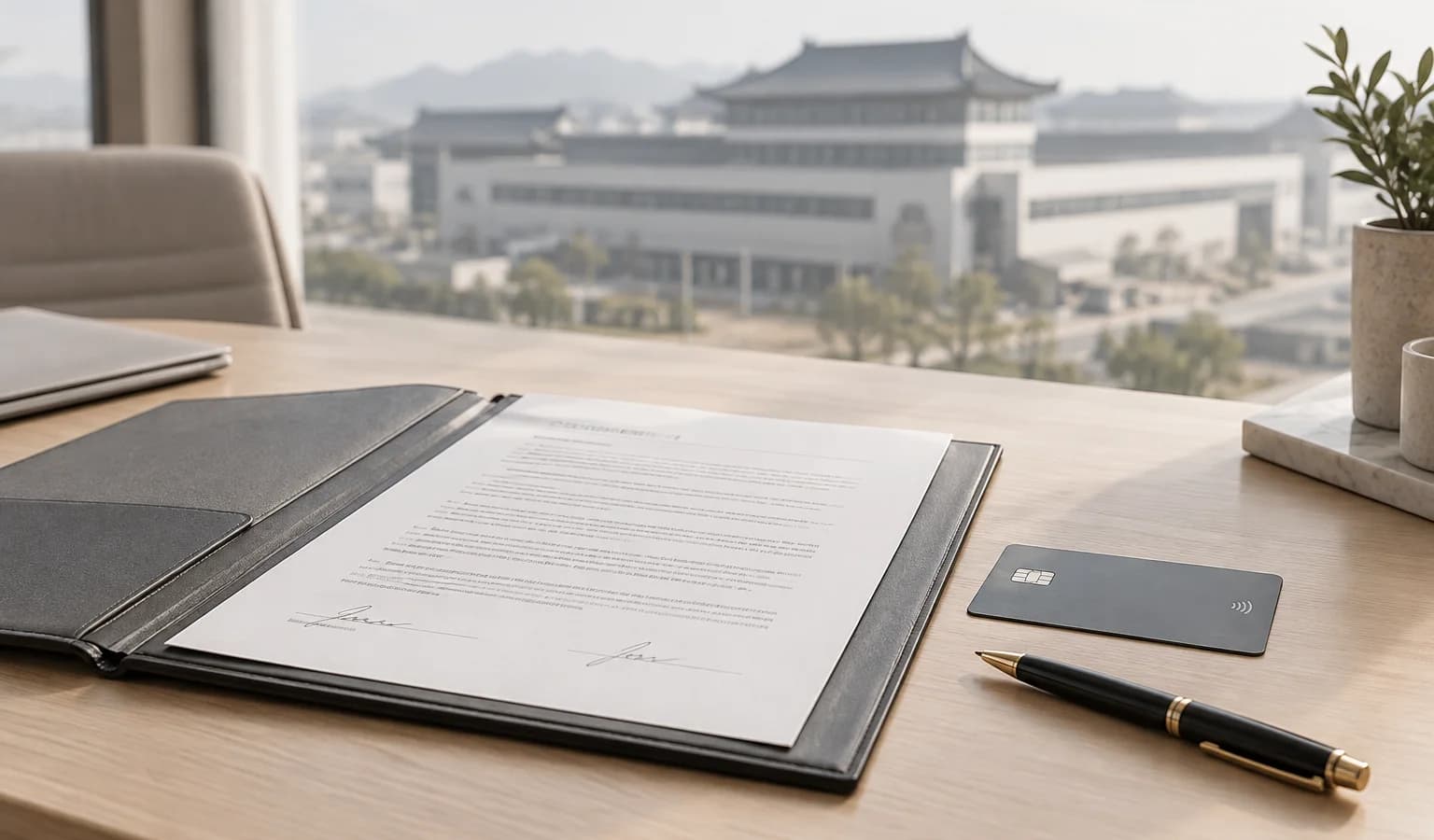
After the price is agreed, it is important to record it in writing. This is not a legal contract, but it is a confirmation of the agreement. The letter should state:
- The agreed price and currency.
- The delivery basis (FOB, EXW, etc.).
- The order volume.
- The validity period of the price (for example, "the price is valid for 30 days").
- Payment terms.
This helps avoid misunderstandings in the future. If the factory later wants to change the price, you will have written confirmation of the previous agreement.
Practical summary: the sequence of a conversation about price
A conversation about price with a Chinese factory is a sequence of stages. It is not worth skipping the first ones in order to get to the last ones faster.
- Clarify the structure of the price. Ask questions about the components, not about the figure.
- Understand who makes the decision. If the manager does not have the authority, find a way to reach the owner or production manager.
- Indicate a range, not a specific target price. This gives room to maneuver.
- Offer an exchange, do not demand a discount. Show what you are ready to give in return.
- Watch for indirect signals. A pause or an evasive answer is not always a refusal.
- Preserve the interlocutor's face. Do not put pressure publicly.
- Record the result in writing. This will protect you in the future.
This sequence does not guarantee that you will get the desired price. But it reduces the risk that the conversation will end in nothing, and increases the likelihood that you will find an option acceptable to both sides.
FAQ
Can you haggle with a Chinese factory?
Yes, but haggling is not the only and not always the best way. It is more productive to discuss the structure of the price and offer an exchange: increasing volume, changing payment terms, simplifying packaging. Direct haggling without offering something in return is often perceived as pressure.
Why can't the manager give a discount right away?
The export manager often does not have the authority to lower the price on his own. The decision is made by the factory owner or production manager. The manager performs the function of communication and coordination. Putting pressure on him is pointless, and sometimes harmful.
What does it mean if the factory does not respond to a request for a discount?
This may be an indirect refusal or a signal that the issue requires time. It is not worth immediately writing a follow-up email with a demand. It is better to wait and ask the question in a different form, offering an alternative.
Should you name your target price?
It is not worth naming a specific figure in the first message. It is better to indicate a range that shows you are serious and have constraints. This gives the factory the opportunity to offer an option within your budget.
How do you record the agreed price?
After agreeing on the price, it is worth sending a confirmation email: price, currency, delivery basis, volume, validity period of the price, payment terms. This is not a legal contract, but written confirmation helps avoid misunderstandings.
- #ansimofff-49ada2afb660652b
- #переговоры с Китаем
- #китайский язык для бизнеса
- #китайские фабрики
- #цена