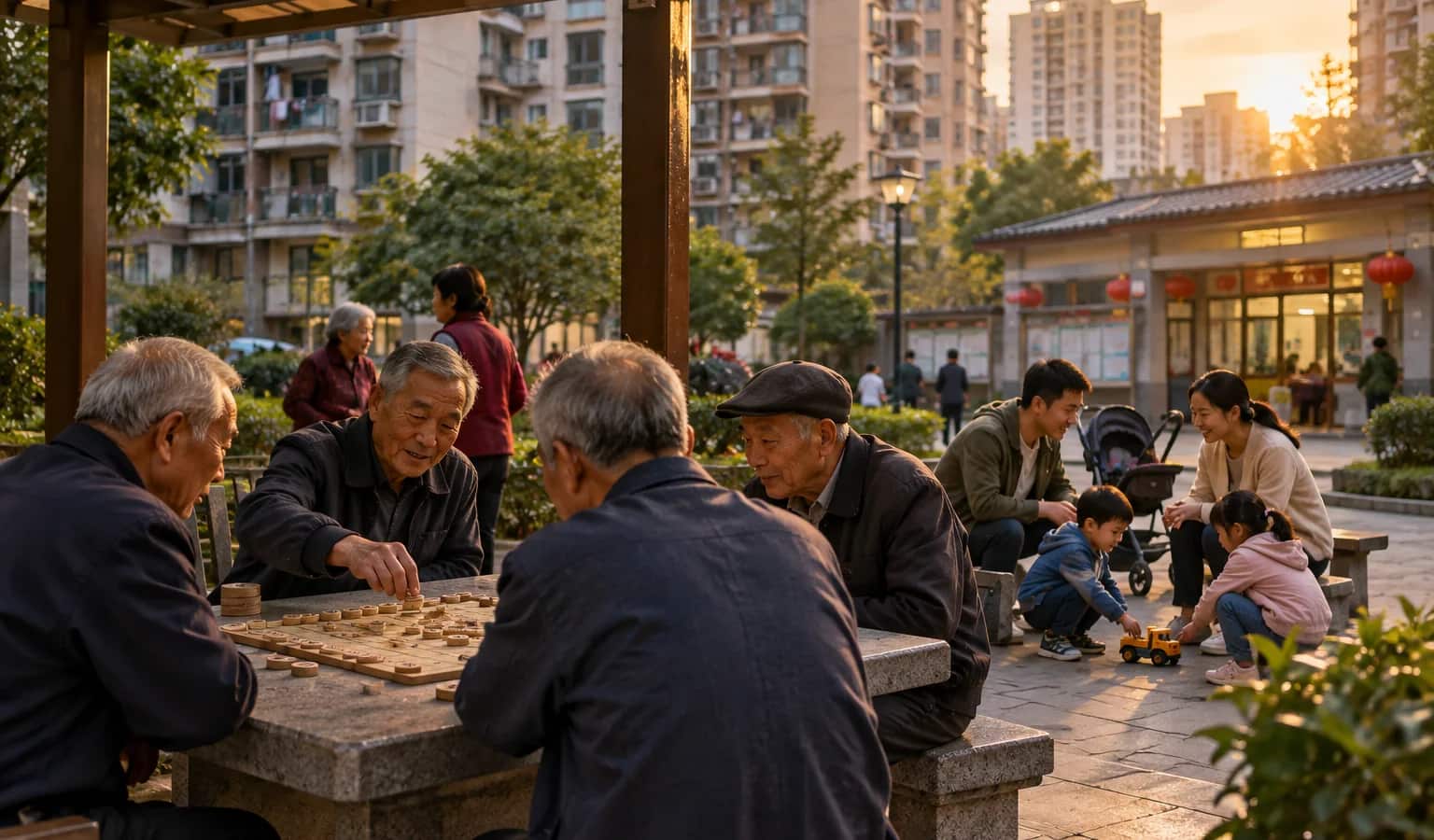

The question "why Chinese people try to avoid open conflict" requires careful wording. "Chinese people" are not a monolithic group: behavior depends on region, generation, sphere (family, work, business, politics), and the specific situation. This is not about an innate trait, but about a culturally encouraged strategy that has its own reasons and limits. Below are the main explanations: the concept of "face," the value of harmony, the long-term nature of relationships, the role of intermediaries, and informal mechanisms.
The concept of "face" (mianzi) and social harmony
In Chinese culture, "face" (mianzi) is social capital, reputation, and respect in the eyes of others. Open conflict can lead to "loss of face" for both sides: public disagreement or criticism is perceived as a threat to status and can damage relationships more than the subject of the dispute itself. Therefore, preference is given to smoothing over sharp edges.
This strategy is connected to the Confucian tradition, where harmony (he) is an ideal, rather than the absence of disagreements. Harmony presupposes the ability to maintain balance even when interests differ. In everyday life, this is expressed in avoiding direct confrontation, especially in public.
Long-term relationships matter more than a momentary victory
In business and personal ties, stable mutual obligations are valued. Open conflict can cut off access to a network of contacts and resources, so the strategy of "preserving the relationship" is often more advantageous than winning a particular dispute. In negotiations, the Chinese side may avoid direct confrontation so as not to undermine future cooperation, even if the current terms do not suit it.
This does not mean agreement: disagreement may be expressed indirectly, and a decision may be postponed until a more convenient moment.
Informal mechanisms and intermediaries instead of direct confrontation
To convey dissatisfaction or settle a dispute, a third party is often used — a mutual acquaintance, someone older in age or position. Indirect signals, hints, changing the topic, and postponed discussion make it possible to express disagreement without a public clash. In organizations, conflict is often defused at an early stage through informal channels rather than through official complaints.
Such an approach reduces the risk of "loss of face" and preserves the possibility for further interaction.
Institutional and legal factors
Historically in China, court proceedings were not the first choice: mediation and reconciliation were traditionally preferred. The modern system also encourages mediation: courts and conciliation committees are oriented toward pre-trial settlement. Going to court can be perceived as a rupture in relations and a "loss of face" for both sides, so it is resorted to when other paths have been exhausted.
This does not mean that Chinese people never go to court: in business practice, lawsuits do occur, especially when large sums or the protection of key interests are involved.
When avoiding conflict does not work: caveats and exceptions

In some situations, open conflict is inevitable: protecting key interests, legal disputes, market competition. The younger generation and urban residents may be more direct in expressing disagreement. Within a family or between close friends, greater directness is acceptable than with strangers or superiors.
One should not romanticize "harmony": avoiding conflict can lead to an accumulation of dissatisfaction and sudden explosions. Moreover, the avoidance strategy is not universal for all Chinese people — it is only one of the common behavioral patterns.
Practical conclusions for the Russian-speaking reader
- When communicating with Chinese partners, do not perceive avoidance of direct confrontation as weakness or agreement.
- Look for informal feedback channels and use intermediaries if you need to convey criticism.
- Keep in mind that public disagreement can have more serious consequences than in some Western cultures.
- At the same time, do not make generalizations: observe the specific person and context.
FAQ
Do all Chinese people avoid conflicts?
No. This is a widespread cultural strategy, but behavior depends on the individual, region, generation, and situation. Many Chinese people are quite capable of direct confrontation when necessary.
Does avoiding conflict mean that a Chinese partner agrees?
Not necessarily. Avoiding an argument may mean a desire to preserve the relationship or postpone a decision, rather than agreement. It is better to clarify the position through informal channels.
Why are intermediaries preferred in China?
An intermediary helps preserve the "face" of both sides and reduces the risk of an open clash. This is a traditional practice that is also supported by modern mediation institutions.