A small trial batch with a Chinese supplier is not a scaled-down copy of a regular order. For the factory it is a separate production cycle with its own economics, and that is precisely why the conversation about it almost always runs into resistance. Understanding this economics changes both the tone of the negotiations and their outcome.
Below is a breakdown of how to conduct such a conversation: what to prepare, which arguments work, what to lock into the agreement, and when it is more honest to abandon the idea of a trial batch in favor of another channel.
Why the supplier resists a small batch in the first place
The first thing worth understanding: the resistance is in most cases economic, not personal. The supplier is not rejecting you as a person — he is assessing whether launching production for your volume pays off. Once this distinction is made, the negotiation stops being a matter of sympathy and becomes a matter of terms.
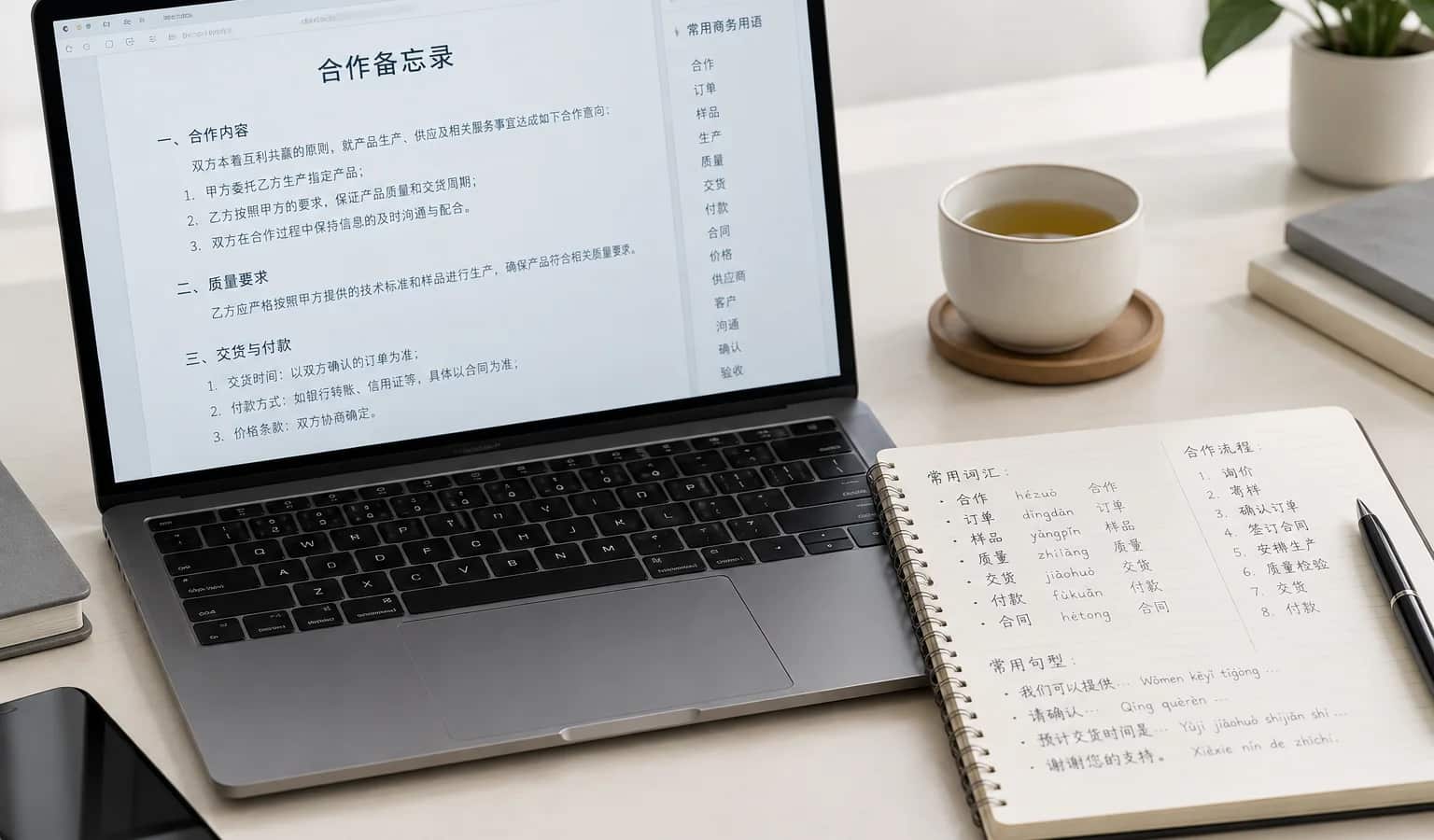
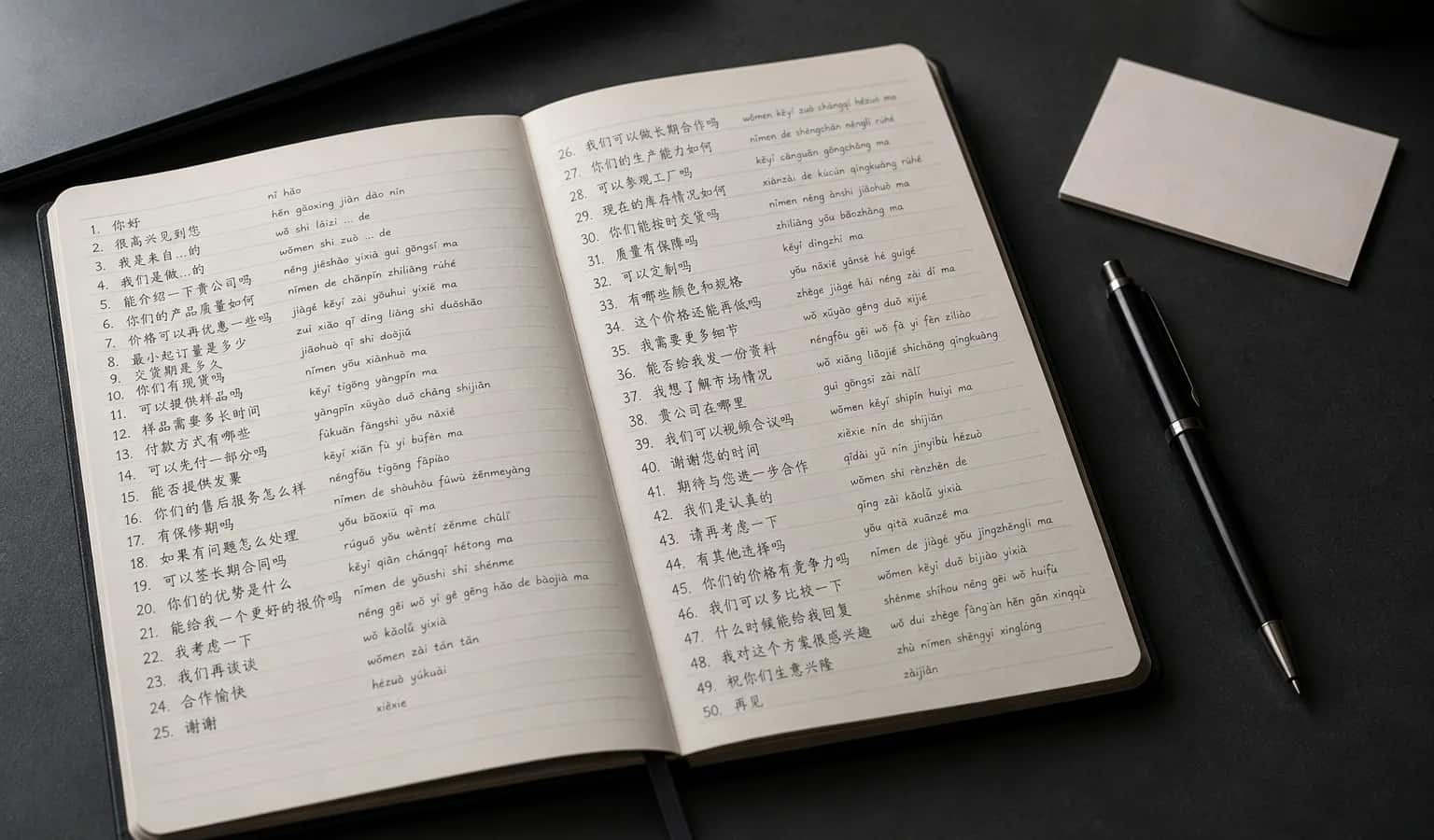
To speak about this in the same language, a minimal set of terms is needed. In Chinese business correspondence they come up constantly, and without them the conversation quickly drifts into generalities:
- 起订量 (qǐdìngliàng) — minimum order quantity, MOQ. The threshold below which the factory will not take on production.
- 打样 (dǎyàng) — making a sample. A separate stage, often preceding any order.
- 试单 (shìdān) — a trial order, a test batch. The first real shipment of a small volume.
- 大货 (dàhuò) — a serial batch, mass production.
The key distinction that many miss: 打样 and 试单 are not the same thing. The factory often makes a sample almost at a loss, because it opens the conversation and costs relatively little. A trial batch is already a production cycle: line changeover, purchasing raw materials for the minimum batch from a sub-supplier, separate packaging, separate shipment. The economics of these two stages are different, and confusing them in negotiations means losing arguments.
Hence the practical conclusion. When you ask for a 试单, you are asking the factory to launch production for a volume that may not be profitable for it. Your task is not to persuade, but to show under what conditions this launch stops being a problem for it.
What to prepare before the first conversation about a 试单
A conversation about a trial batch is poorly improvised. Before writing to the supplier, it is useful to answer a few questions for yourself — they will determine both the volume and the arguments.
First, formulate exactly what you are testing. It could be the market (will the product sell in your channel), quality (does the product match what was claimed), logistics (how delivery and customs go), the payment channel, or the supplier himself (how he handles deadlines and communication). The answer determines what volume you actually need: to check quality, a few samples are sometimes enough; to check the market, a small batch that can be sold.
Then define two boundaries for yourself. The upper one — by budget: how much you are willing to spend on the test, including logistics and possible losses. The lower one — by volume: below what quantity the test loses its meaning. It is better to keep these figures in mind before the negotiations begin, because the supplier will push you precisely toward increasing the volume.
It is useful to prepare a short description of who you are and what volume is potentially interesting in the long run. Restraint matters here: an inflated promise of future volume is tested in practice and costs reputation. It is better to name a modest but real horizon than an impressive but unachievable one.
And finally, decide in advance whether you are ready to accept a higher price per unit than the serial one. This is the main lever in the conversation, and it is worth thinking about before you need it.
How to formulate the request: from 打样 to 试单
The logic of the sequence is almost always the same: first a sample (打样), then a trial batch (试单), then a serial order (大货). Trying to skip the sample stage and immediately demand a trial batch arouses suspicion — the supplier does not understand what exactly you are agreeing to and how you will evaluate the result.
The wording of the request is built around your readiness to pay for the test, not around a plea for indulgence. This is a fundamental point. A conversation in the logic of "I have a small business for now, please be understanding" puts you in the position of a supplicant and rarely leads to a result. A conversation in the logic of "I need to test the product in my market, I am ready to pay for the test and discuss the terms" is a conversation between equals.
It is better to explain why you need a small volume through a market argument: testing a niche, seasonal demand, a trial sale before expanding. Not through "I don't have money yet" — even if that is partly true, such wording gives the supplier nothing but doubts about your solvency.
A hypothetical model of the letter might look like this: a brief introduction, a reference to a specific product, a reference to a sample made earlier, a direct acknowledgment that the volume is small, and an offer to discuss the price per unit and payment terms for this volume. This is a model, not a ready-made template — the specific wording depends on your situation and on what stage you are at.
Four levers that actually work
Once the conversation has reached the terms, you have several tools. They work not separately but in combination, and each of them covers part of the supplier's risk.
Price per unit
Agreeing to a higher price per unit in exchange for lowering the 起订量 is the most direct and honest trade. The factory loses on volume but compensates with margin. If you are ready to pay more for the test than for a serial order, this immediately changes the conversation: you are not asking for a discount, you are offering compensation.
Payment
Full prepayment for a small batch removes the supplier's risk almost entirely. For the factory this is often more important than the volume itself: it does not put its own money into production that may not pay off. Full prepayment often opens a door where volume alone does not.
Logistics
A readiness to pick up the cargo yourself or through your own agent, without burdening the factory with export clearance, is another lever. Export clearance for a small batch can be more troublesome for the factory than the production itself. If you take this part on yourself, you remove extra work on its side.
Perspective
A concrete but not inflated horizon: "if the test goes well, the next order will be such and such." It is important not to overdo it here. A promise you do not keep closes the relationship faster than refusing the test. A modest but real forecast works better than an impressive but empty one.
When a 试单 is impossible and what to do instead
Sometimes the factory really cannot make a small batch — and this is not an excuse. Signs of a real limitation: raw materials are purchased only in large batches from a sub-supplier, the line is set up for one format and changeover for your volume is unprofitable, the sub-supplier does not ship below a certain minimum. In such cases pressure does not help: you run into someone else's production chain.
One way out is purchasing through a trading company (贸易公司, màoyì gōngsī) or an intermediary. Trading companies often keep a warehouse and can ship a small batch from stock where the factory cannot launch production for it. The price per unit will be higher, but you get the goods and information about them without fighting production logic.
Another option is more samples instead of a trial batch. Sometimes several samples give more information about quality and about the supplier himself than a small order, and cost less.
And an honest assessment: sometimes the right answer is not to push, but to change the supplier or the channel. If the factory is not ready for a small volume, this does not mean the product is unavailable — it means you need a different path to it.
Mistakes that close the conversation
Some moves predictably worsen your position. It is worth knowing them in advance.
- Claiming a large future volume that you cannot confirm. In the Chinese business environment such claims are quickly tested in practice and cost reputation.
- Haggling over the price of the trial batch as hard as over the serial one. On a trial volume the savings are insignificant, and the signal to the supplier is bad: he sees that you will keep pushing further.
- Ignoring the sample stage and immediately demanding a trial batch. This arouses suspicion and deprives you of the ability to refer to an agreed sample at acceptance.
- Negotiating only on price, offering nothing in return — neither prepayment, nor your own logistics, nor a realistic horizon.
The general logic of these mistakes is the same: they increase the supplier's risk rather than reduce it. And agreeing to a trial batch is first and foremost a decision about risk.
What to lock into the agreement on a 试单
Even if it is a small batch, the agreement is worth putting in writing. It does not have to be a full-fledged contract — but the volume, price per unit, production deadlines, payment terms, and shipping method should be spelled out. Verbal agreements in correspondence with a supplier easily diverge in the details.
It is worth separately discussing what counts as acceptance of the trial batch and what happens if the quality does not match the agreed sample. This is the point that is most often forgotten, and then it is precisely where disputes arise.
And one more, less obvious point: a trial batch is a test not only of the product but also of communication. How the supplier answers letters, how he reacts to problems, whether he keeps deadlines — all of this is information about how a serial order will go with him. Sometimes this information turns out to be more valuable than the product itself.
Practical summary
A small trial batch is a deal, not a request. The supplier agrees when he sees that the risk is closed for him or at least limited. The most workable combination looks like this: a sample, then agreement to a higher price per unit, full prepayment, simple logistics on your side, and a restrained promise about future volume.
If after an honest conversation the factory is not ready for a 试单, that is also a useful result. You learned about its way of working before investing money, and you can look for another channel: a trading company, an intermediary, or another manufacturer.
FAQ
How does 打样 differ from 试单?
打样 is making a sample, a single item for approval. 试单 is a trial order, that is, already a production batch of small volume. A sample is often made almost without profit in order to start the conversation; a trial batch is a full-fledged production cycle with changeover, raw material purchasing, and shipment.
Can you get a trial batch cheaper than the serial price?
Usually not. A small volume almost always means a higher price per unit, because fixed costs are spread over a smaller quantity of goods. The realistic strategy is not to lower the price of the test, but to agree to its increase in exchange for lowering the minimum volume.
What to do if the factory refuses a trial batch?
First find out the reason: is it a production limitation or the manager's position. If the limitation is real — consider purchasing through a trading company that keeps a warehouse, or limit yourself to samples. Sometimes it is wiser to change the supplier than to insist on the impossible.
Is a contract needed for a trial batch?
A full-fledged contract is not always mandatory, but putting the terms in writing — volume, price, deadlines, payment, shipping, and acceptance criteria — is necessary. This protects both sides and reduces the risk of discrepancies in the details.