How to get a discount from a Chinese supplier without ruining the relationship
Why a discount in Chinese negotiations is an exchange, not a request; how to prepare, what to offer in return, and where the line runs between persistence and loss of face.
 Mikhail Ansimov14 min read
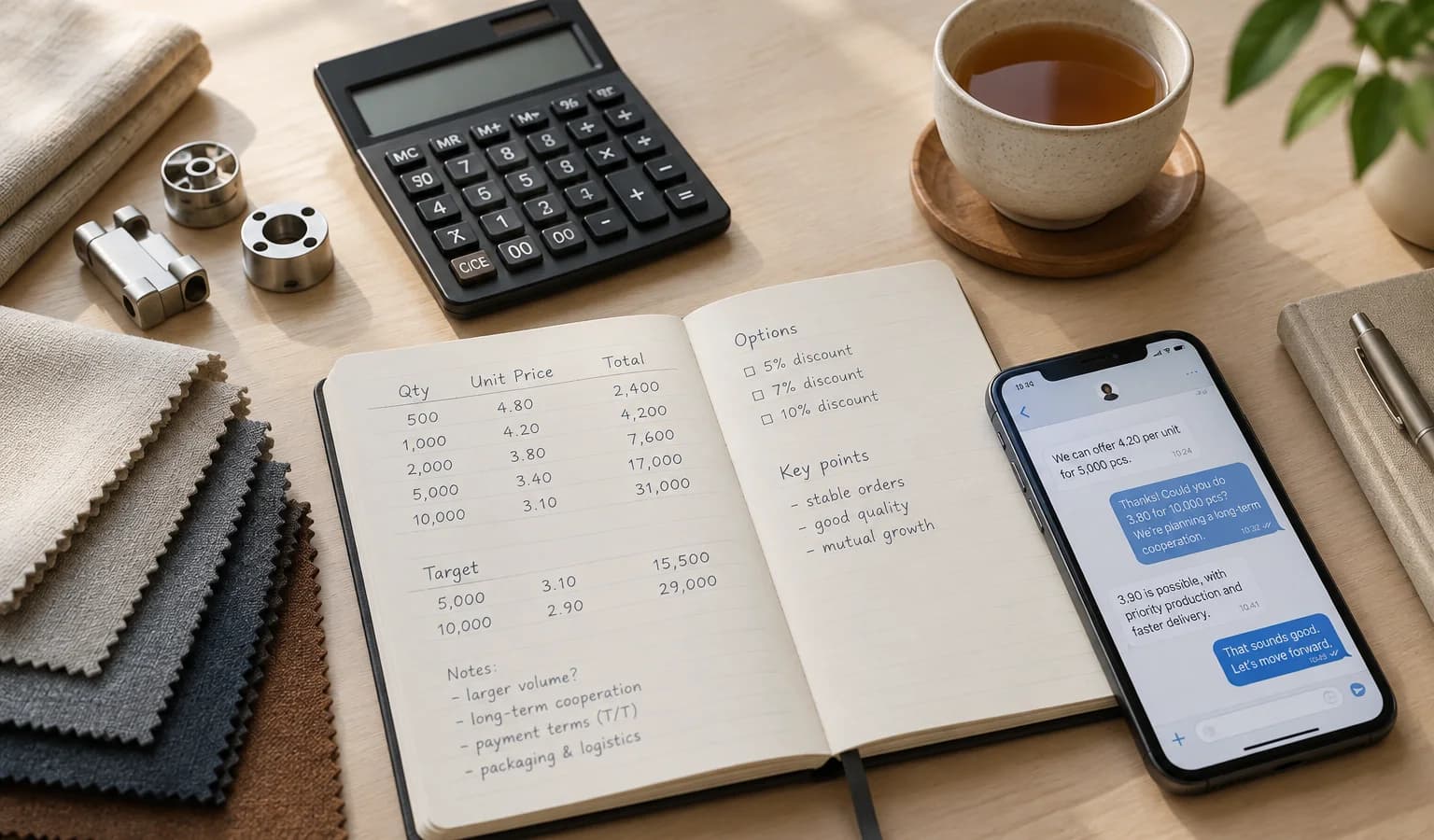
The question "how to squeeze a discount out of a Chinese supplier" is usually asked with the wrong mindset. A discount is perceived as something that must be wrested from the seller: apply pressure, threaten to go to a competitor, haggle at any cost. In the Chinese business environment, this framing works poorly, and sometimes costs more than the discount itself. It is more accurate to view the price not as a fixed value that can be "pushed down," but as the result of an exchange: you receive a concession, the supplier receives something in return. Below is how this logic works and how to use it without destroying the relationship.
Why the question "how to squeeze out a discount" is wrongly framed from the start
In Russian business speech, haggling is often described with verbs of struggle: to squeeze out, to pry loose, to push through. In Chinese negotiation practice, price is almost always tied to relationships and obligations. If you come with a "push them down" mindset, the supplier reads this — and reacts not only to the number, but also to what kind of partner you will turn out to be going forward.
This does not mean you should not negotiate. Haggling in China is a normal part of a deal, and the supplier usually leaves room for manoeuvre in the first price. The difference is in how you ask. The request "give me a lower price because a competitor is cheaper" puts the seller in a position where he either loses money or loses face. The exchange "I give you this — you give me that" allows both sides to preserve their position.
Here it is important to distinguish between a cultural norm and common practice. In large export companies with a well-established pricing system, a manager may have no right to change the price at all — and then no amount of persistence will help. At small factories and with trading intermediaries, there is more room to bargain. Saying "the Chinese always haggle" is just as wrong as saying "the Chinese never concede."
What lies behind the price: what the supplier adds up to get the number
To ask for a discount meaningfully, it helps to understand what the quote consists of. In a typical case, it is:
- the cost of raw materials and components;
- labour cost per unit of production;
- fixed costs spread across the batch (equipment, rent, electricity);
- packaging, marking, internal logistics;
- export clearance and intermediary commissions;
- built-in margin and a "cushion" for haggling.
When you ask for a discount "just because," you are pressuring precisely the margin — what the supplier considers his profit. When you change the order parameters so that costs go down, you give him a legitimate reason to lower the price without losing face. For example, increasing volume reduces the share of fixed costs per unit; simplifying packaging removes expenses; giving up urgency allows the order to be placed in a less busy period.
This does not mean you should recalculate someone else's cost structure yourself. The point is different: a discount tied to a basis that is understandable to both sides is perceived as a business proposal, not as pressure.
Preparation before the first conversation: what you pay for the right to ask
The right to ask for a discount does not appear at the moment you voice it. It is formed earlier — by what you have already communicated about yourself.
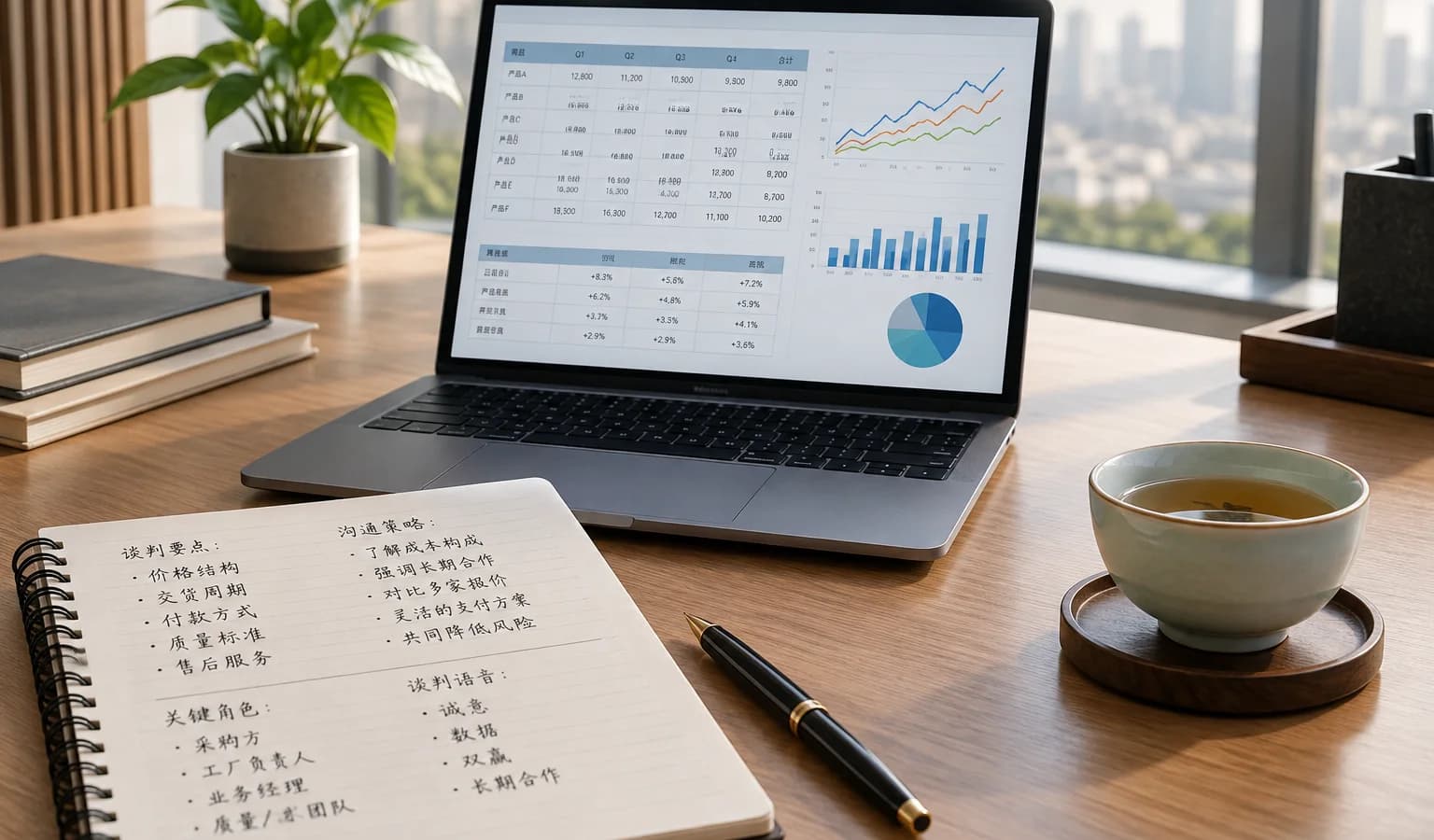
It is useful to determine several things in advance. First, your real volume and its horizon: a one-off order for a trial batch and regular supplies are different conversations. Second, your flexible parameters: deadlines, payment terms, packaging, permissible deviations in the specification. These are precisely what become the currency of exchange. Third, your alternative: if you do not have a second or third supplier with comparable quality, your negotiating position is weaker, and it is worth admitting this honestly at least to yourself.
It is also worth thinking separately about how you come across in correspondence. A supplier who sees polite, specific letters with a clear specification perceives you as a serious buyer. A supplier who receives a stream of short messages saying "give me a better price" perceives you as a buyer with whom it is not yet clear whether it is worth working.
The first price request: how not to burn the room for bargaining
A common mistake is to respond "too expensive" immediately after the first quote. This is a dead end: you have given no basis at all, and the supplier ends up in a position where he must either concede for no reason or refuse. Both are awkward.
The workable sequence looks different. First you clarify what exactly is included in the price: material, packaging, shipping terms, delivery basis. Then you formulate the request as a question about possibility, not as a demand: at what volume would the price change, what could be simplified, is there an option with a longer lead time. This way you do not put the person in a corner, but open a conversation.
It is useful to state right away that you are considering cooperation not as a single deal. The wording "we plan regular orders, so we want to understand what the price would look like at a stable volume" changes the frame: you are talking about the future, not haggling over today's number.
The logic of concession: exchange, not pressure
In Chinese negotiation practice, a concession is rarely one-sided. If the supplier lowers the price, he usually expects you to change something on your side too. This is not a formality, but a way to preserve balance: a one-sided concession is perceived as a loss of position, while a mutual one is perceived as movement toward agreement.
Therefore, a request for a discount should be accompanied by your offer. Not "lower the price by 10%," but "we can increase the volume to such-and-such and are ready to pay such-and-such a share in advance — under these conditions, what price is possible?" You are not pressuring, but proposing a deal.
Here it is worth distinguishing two concepts that are often conflated in Russian. 面子 (miànzi, "face") is a person's public standing in the eyes of significant others. 人情 (rénqíng, "human feeling," mutual obligation) is an accumulated obligation that arises when one side does something for the other. A discount obtained in exchange for your concession does not create a debt: it is an exchange. A discount begged for without a basis creates 人情 — the supplier has, as it were, "lent" to you, and sooner or later this will come up. Sometimes this is convenient, but more often it costs more.
What you can give in return: currency that is not money
A buyer usually has more non-monetary resources than it seems. Here is what actually works as an exchange:
- Volume and regularity. A commitment to order steadily over several months is often worth more than a one-off large batch.
- Payment terms. A higher prepayment or, conversely, a willingness to work on the supplier's terms reduces his financial risk.
- Deadlines. Flexibility on deadlines allows the factory to load production during a non-peak period.
- Simplification. Giving up complex packaging, non-standard marking, or minor refinements reduces costs.
- Reputation. If you are ready to recommend the supplier to other buyers or give a review, that is also a resource — but only if you will actually do it.
Not all of these points fit every situation. Payment terms matter for small factories with limited working capital and have almost no effect on large export companies. Flexibility on deadlines matters if the factory has seasonality. The point is to offer what is genuinely valuable to the specific supplier, not what is convenient for you.
Indirect refusal and how to read "no" signals in the price
In Chinese communication, a direct "no" is often replaced by softened formulations. In price negotiations this shows up as follows: the supplier does not say "I can't lower it," but responds "this is already the lowest price," "we'll see what can be done," "the price depends on the volume." The first is a polite refusal. The second is a pause, not a promise. The third is an invitation to continue, but on his terms.
It is useful to distinguish the levels. If the manager repeats the same number unchanged after two or three approaches, most likely he really cannot change it — either he does not have the authority, or the price is already close to the limit. If he offers options but does not lower the price directly, he is looking for an exchange. If he dodges the topic of price and steers the conversation toward quality or deadlines, he possibly does not want to refuse directly.
A separate signal is silence. A pause in response to a discount request does not always mean refusal. Sometimes it is a way to give you time to think or to coordinate the matter internally within the company. Persistent follow-up letters at that moment are more likely to hurt: they look like pressure.
Three bargaining scenarios: small order, repeat order, large contract
The logic of bargaining depends on the scale and stage of the relationship.
Small order. If you are buying a trial batch, the room for a discount is minimal: fixed costs are spread over a small volume, and lowering the price is unprofitable for the supplier. Here it is more reasonable not to haggle over price, but to agree on the quality of the sample and on terms for the future: "if the sample works out, at volume X what would the price be?" This moves the discount conversation to the next stage without burning it now.
Repeat order. This is the most convenient moment to bargain. You already have a history, the supplier knows you pay, and he is interested in continuing. Here a reference to volume and regularity works: "we are ready to order monthly, how will the price change with such a schedule?" In this case, the discount is perceived as an investment in a long-term relationship, not as a one-off concession.
Large contract. Here the price is almost always discussed together with the terms: delivery schedule, prepayment, late penalties, acceptance procedure. The discount may not be in the number, but in the terms — deferred payment, free refinements, packaging included. Sometimes it is more advantageous to get not a price reduction but improved terms, because that lowers your total costs.
Mistakes that break both the price and the relationship
Some moves seem effective but cost more than they bring.
- Bluffing about a competitor. Citing a "cheaper offer" that does not exist works once, and then destroys trust. If the supplier realises the competitor is fictitious, your position will be weakened for a long time.
- Public pressure. Discussing price in front of third parties, in a group chat, or at a meeting with other buyers puts the supplier in a position where he loses face. Even if he concedes, the relationship will be ruined.
- Haggling for the sake of haggling. If the price is already adequate, further pressure is perceived as greed. It does not improve the terms, but it worsens the attitude.
- Abruptly changing terms after agreement. If after agreeing on a price you start changing the volume, deadlines, or specification, the supplier perceives this as dishonesty. The agreement loses force.
- Ignoring the manager's face. The manager who secured you a discount is taking a risk before management. If you then demand more, you are putting him on the spot.
When a discount is not needed: cases where haggling hurts
Not every price is a reason to bargain. There are situations where persistence brings more harm than good.
If the supplier works with a narrow circle of buyers and does not need new ones, your negotiating position is weaker than it seems. If the product is technically complex and quality is critical, saving on price can turn into problems in production. If you are just starting the relationship and have not yet tested the supplier in practice, it is more reasonable to first build the working relationship and then discuss terms.
Sometimes the best move is not to ask for a discount, but to ask for something else: a smaller trial batch, expedited shipping, free samples. This does not lower the price, but it lowers your risk — and at an early stage that is often more important.
How to lock in the agreement so it does not dissolve
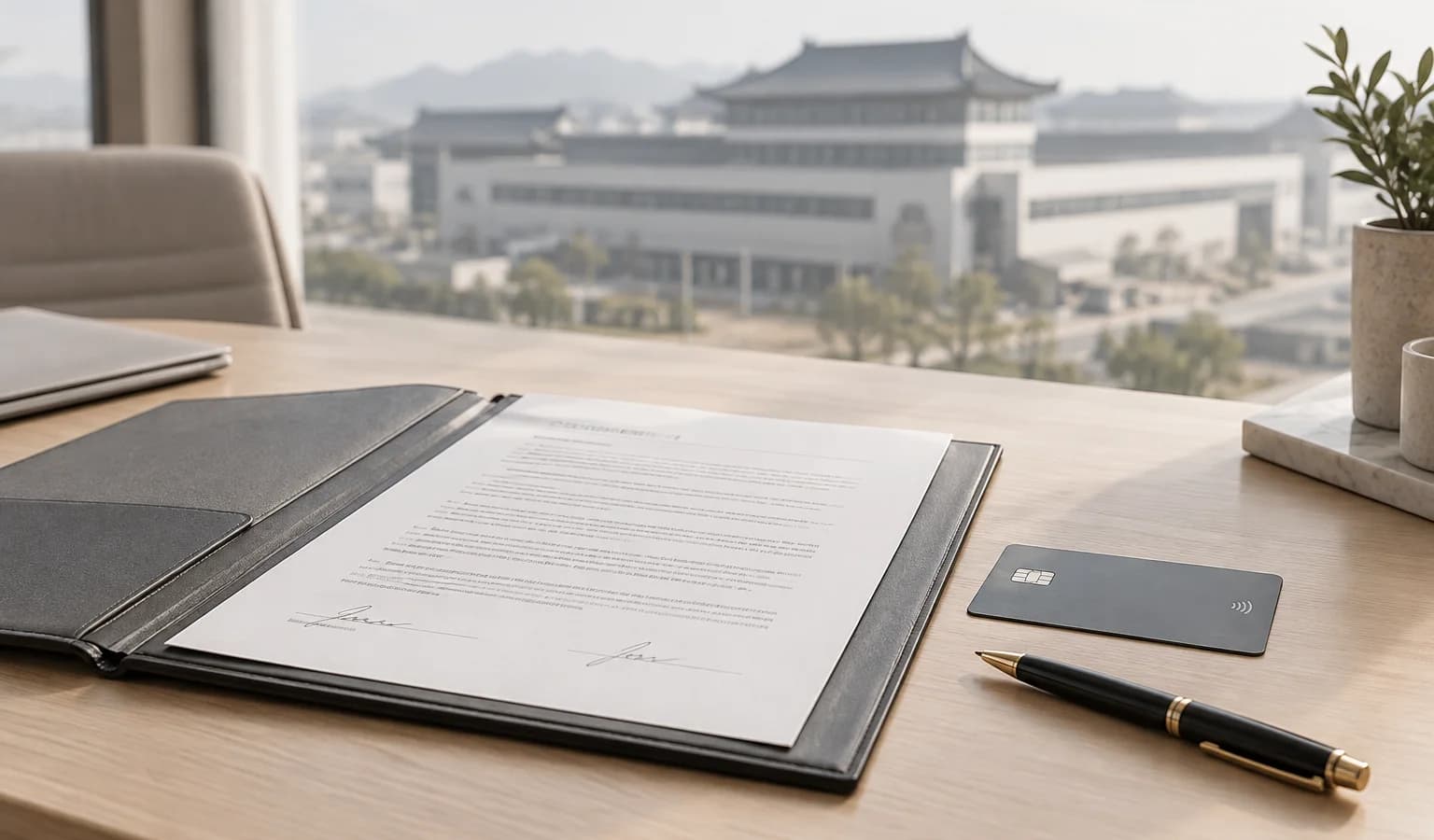
A verbal agreement about a discount in China does not always mean it will make it into the invoice. The reasons vary: the manager did not pass on the information, the employee changed, the cost structure changed. To keep the agreement intact, it is useful to record it.
The method depends on how formal your relationship is. In correspondence, a summary email is enough: "we confirm the agreement: price X at volume Y, deadlines Z." If it is a large contract, the terms are recorded in an annex or specification to the contract. It is important not to turn this into distrust: the wording "so that neither of us has any confusion" sounds neutral, not like suspicion.
If the supplier avoids written confirmation, that is a signal. Perhaps he is not sure he can fulfil the condition, or he agreed to it without authority. In that case, it is worth returning to the conversation and clarifying what exactly he is ready to confirm.
A short summary: what counts as success in price negotiations
Success is not the maximum discount. It is a price that suits both sides and does not destroy the possibility of working together further. If after haggling the supplier fulfils the order worse, drags out deadlines, or loses interest, the gain in the number has turned into a loss in the result.
The practical logic is simple: prepare before the conversation, offer an exchange rather than pressure, read indirect signals, and record agreements. This does not guarantee a discount in every case — sometimes there simply is not one. But it preserves the relationship, which in long-term work with Chinese suppliers is worth more than a few percent on the invoice.
FAQ
Can you get a discount from a Chinese supplier on the first order?
Sometimes yes, but the room for manoeuvre is usually small. On the first order, it is more reasonable to discuss not the price, but the terms for the future: what the price will be for regular supplies. This moves the bargaining to a stage where you have a history and more arguments.
Should you cite a cheaper competitor offer if it does not exist?
No. A bluff works once, and if the supplier realises the competitor is fictitious, trust is hard to restore. If you really do have an alternative offer, cite it specifically, without exaggeration.
What should you do if the supplier does not lower the price but also does not refuse directly?
Most likely he is looking for an exchange or does not have the authority. Try offering something in return: volume, payment terms, flexibility on deadlines. If after two or three approaches the price does not change, it is probably close to the limit.
How do you know that haggling is already harming the relationship?
Signals: replies become shorter, the supplier stops offering options, discussion of price is postponed without explanation. If you feel that each new request causes irritation, it is better to stop and lock in what has already been agreed.
Can you bargain over price after signing the contract?
Usually not: the price in the contract is a fixed term. It can only be changed by mutual agreement, and that is a separate conversation. If you want to leave room for manoeuvre, discuss the terms before signing, not after.
- #деловая культура Китая
- #китайские поставщики
- #переговоры с Китаем
- #закупки в Китае
- #скидка
- #торг